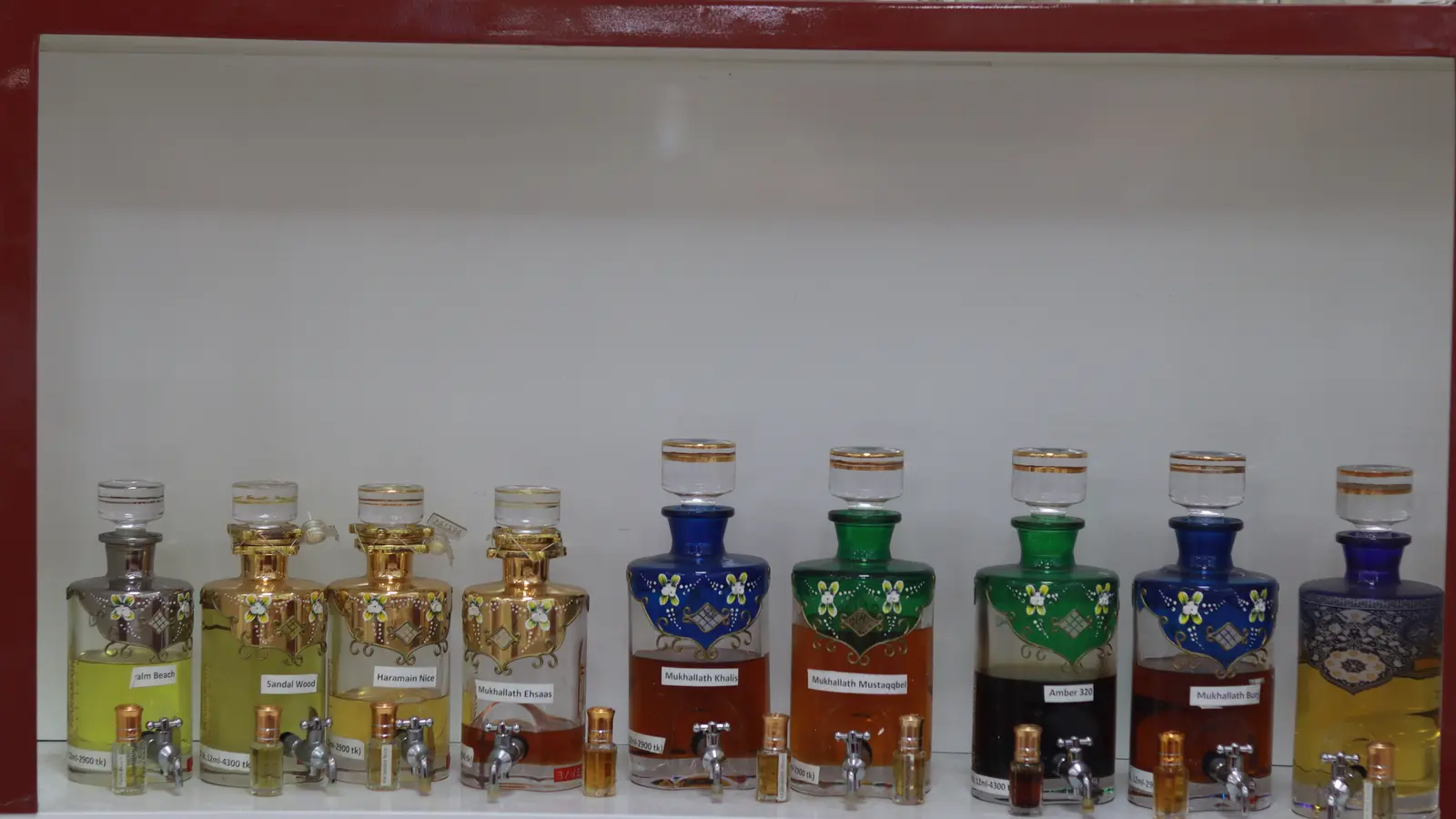
A fragrance price list is hard to read at a glance because nothing on it is the same size. A 10 ml travel spray sits next to a 200 ml bottle; an attar comes in 6 or 12 ml; gift sets mix three sizes in one box. Comparing unit prices across that list is comparing different things.
The number
Divide the unit cost by the milliliters in the bottle. That is your cost per milliliter, and it is the only figure that compares a mini, an attar and a full bottle on equal terms. Do the same with the shelf price and you have what the customer pays per milliliter.
Add it as a column the first time you read a price list. Our line sheet carries size in milliliters for every row, so it is one formula in a spreadsheet.
One list, six rows
Illustrative trade figures — not our price list — chosen to show how far apart the numbers can be:
| Item | Size | Unit cost | Cost per ml |
|---|---|---|---|
| Designer EDP | 50 ml | $62.00 | $1.24 |
| Same EDP | 100 ml | $88.00 | $0.88 |
| Niche EDP | 120 ml | $150.00 | $1.25 |
| Middle Eastern EDP | 100 ml | $22.00 | $0.22 |
| Attar | 12 ml | $14.00 | $1.17 |
| Travel spray | 10 ml | $14.00 | $1.40 |
The attar, which looks cheap, costs almost as much per milliliter as the niche bottle. The travel spray is the most expensive liquid on the list. Neither is a problem — they sell at a price point, not by volume — but you should know it when you set the shelf price.
The big-bottle trap
The 100 ml almost always has a lower cost per milliliter than the 50 ml, and the 200 ml lower again. That does not make it the better buy for your shelf. A larger bottle ties up more cash per unit and crosses a price threshold — often around $150 — where more customers hesitate. If the 200 ml sits for four months while the 100 ml turns monthly, the cheaper liquid is the more expensive stock.
Stock the size that turns. Use the large size where your customers already ask for it by name.
Concentration changes the math
An eau de parfum carries more perfume oil than an eau de toilette of the same line, and usually costs more per milliliter. The customer uses fewer sprays and the bottle lasts longer, which is the argument to make at the counter. When you compare an EDT and an EDP, compare price per milliliter first, then decide whether the difference is one your customers will pay for.
Use it at the counter
The same number helps the sale. “The 100 ml is about forty cents less per milliliter than the 50” is a clear reason to trade up, and it is true on most lines. For gift buyers, the reverse works: the travel spray is the most affordable way into an expensive house.
Key takeaways
- Cost ÷ milliliters is the only fair comparison across a fragrance price list.
- Small formats cost more per milliliter and sell on price point, not volume.
- Buy the size that turns, not the size with the lowest cost per milliliter.
- Price per milliliter is a selling line at the counter, too.